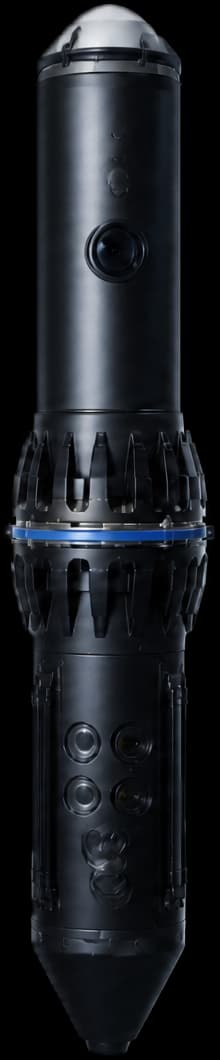
See Argus Statuses
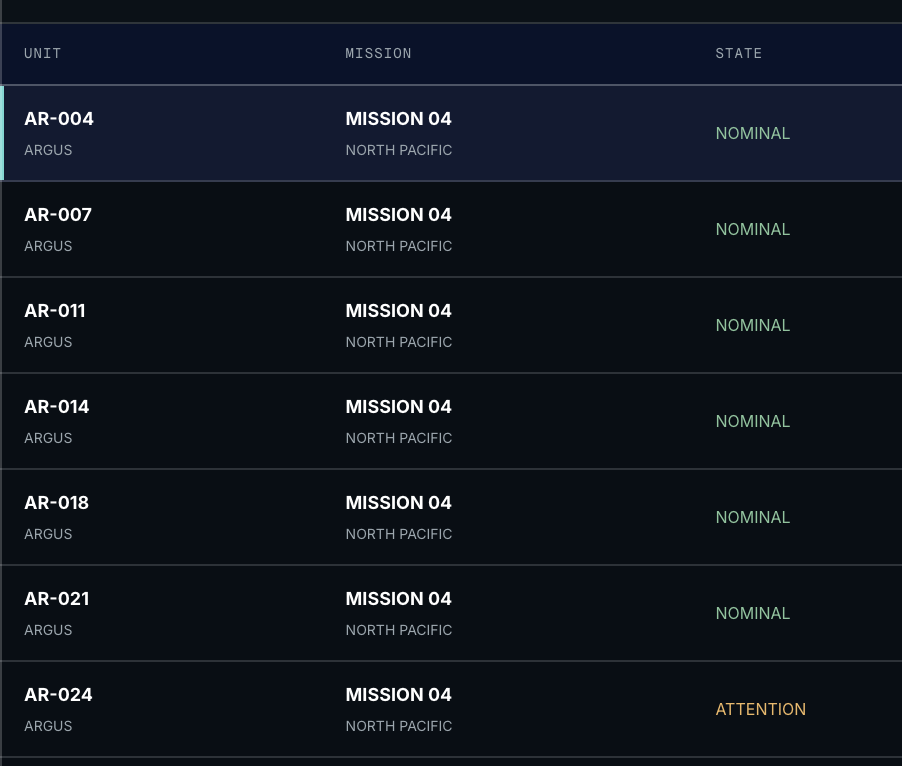
Scan assets across missions. Distinguish nominal assets from those needing attention, then open the node for a closer look.
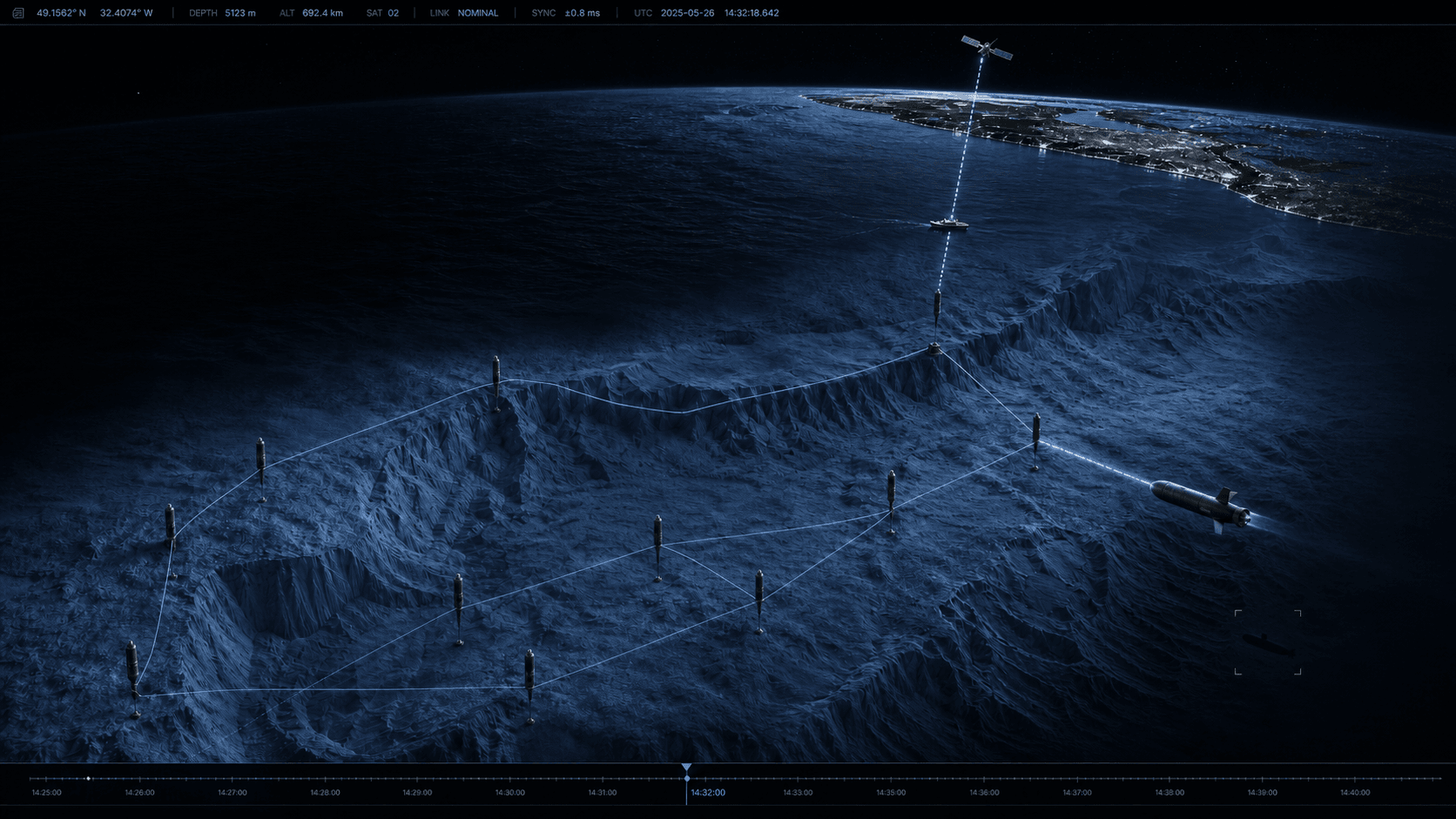
Operating system and control layer
Surface and subsea assets, network health, and mission history. Connected in one operating environment.
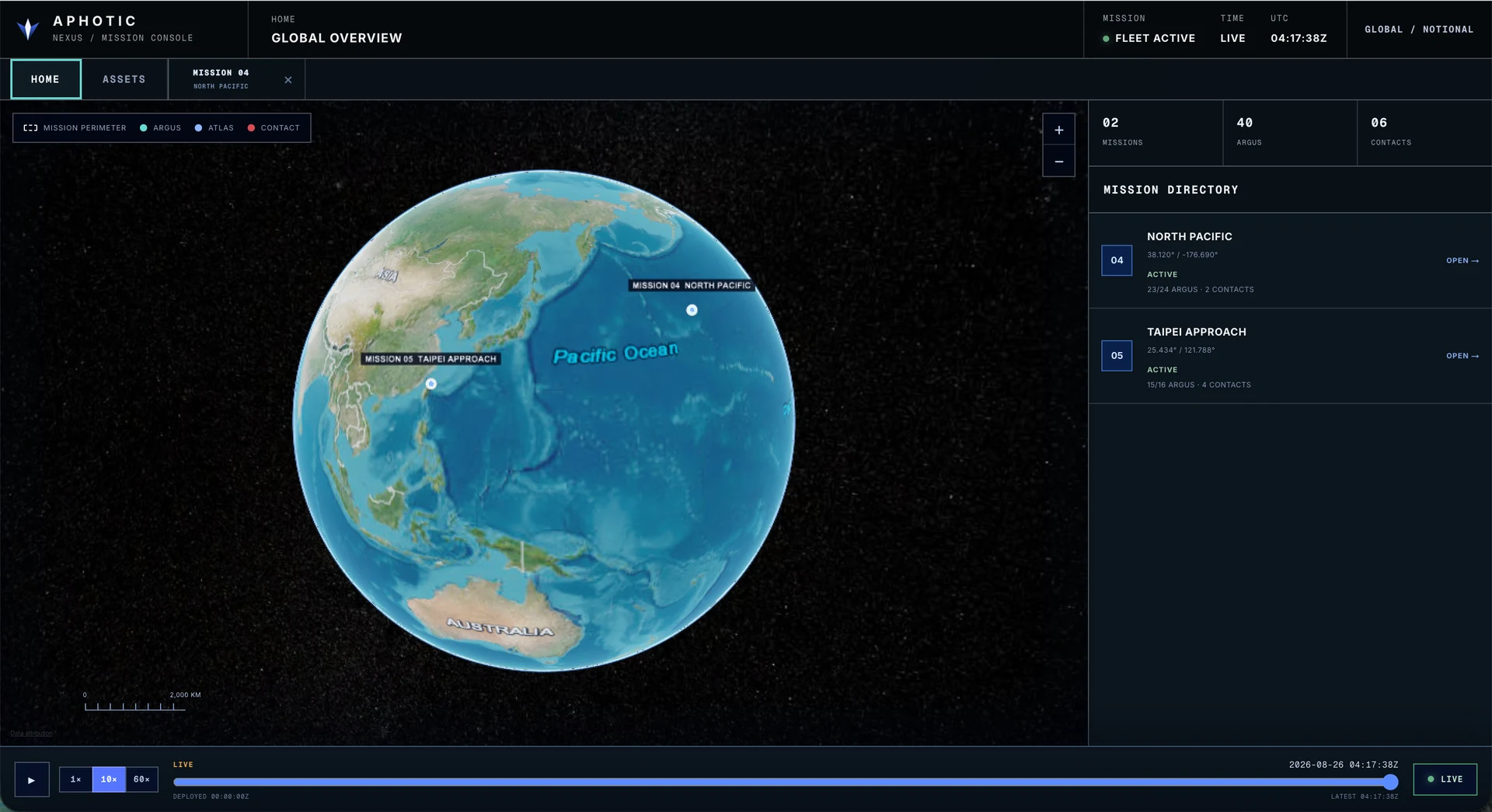
See every mission in one environment. Move from the global picture into an operating area, with its deployed assets, contacts, and history already connected.
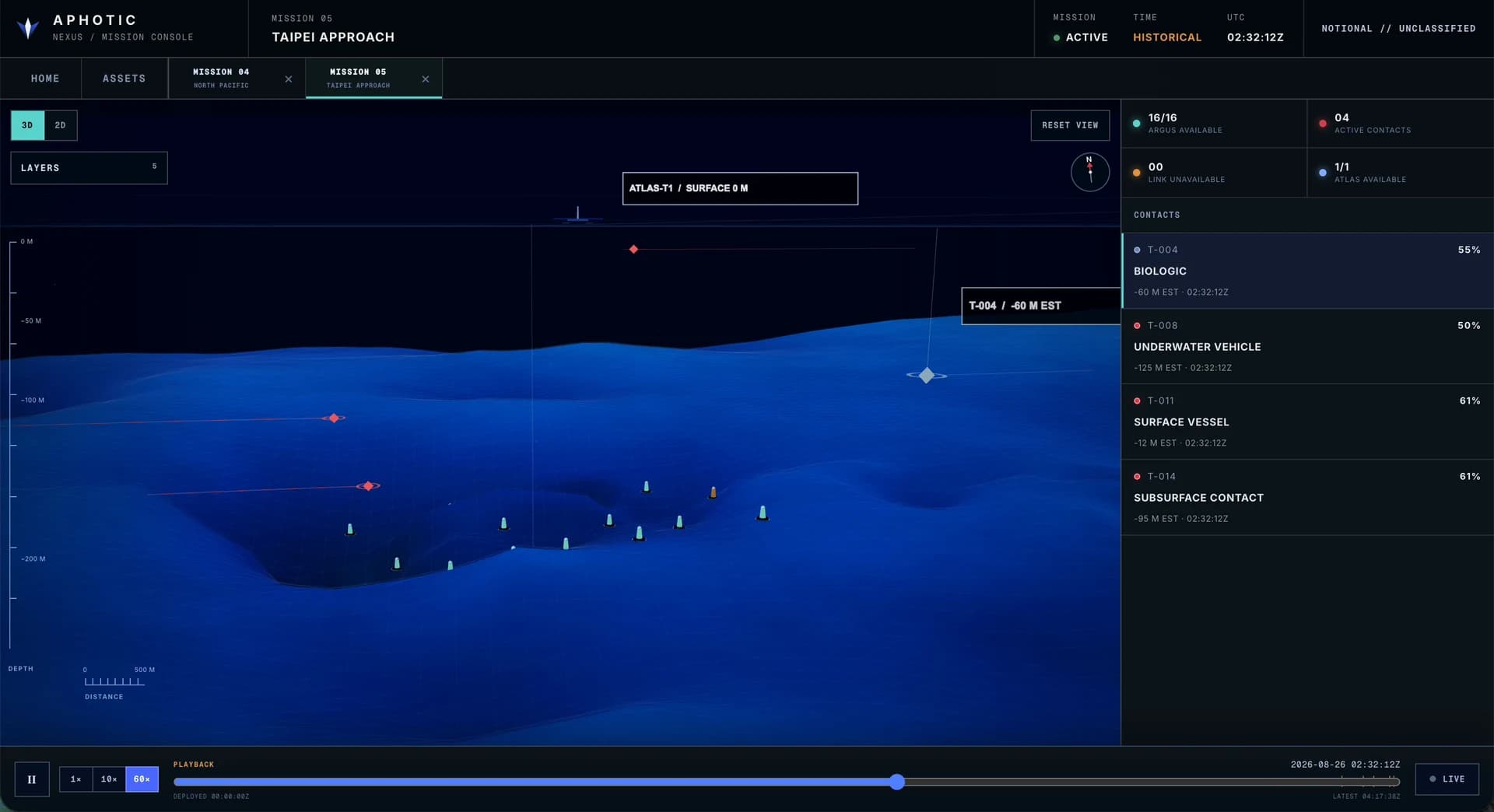
Understand the water column, not just the map. Place surface platforms, seafloor nodes, and contact tracks in the context of depth and terrain.
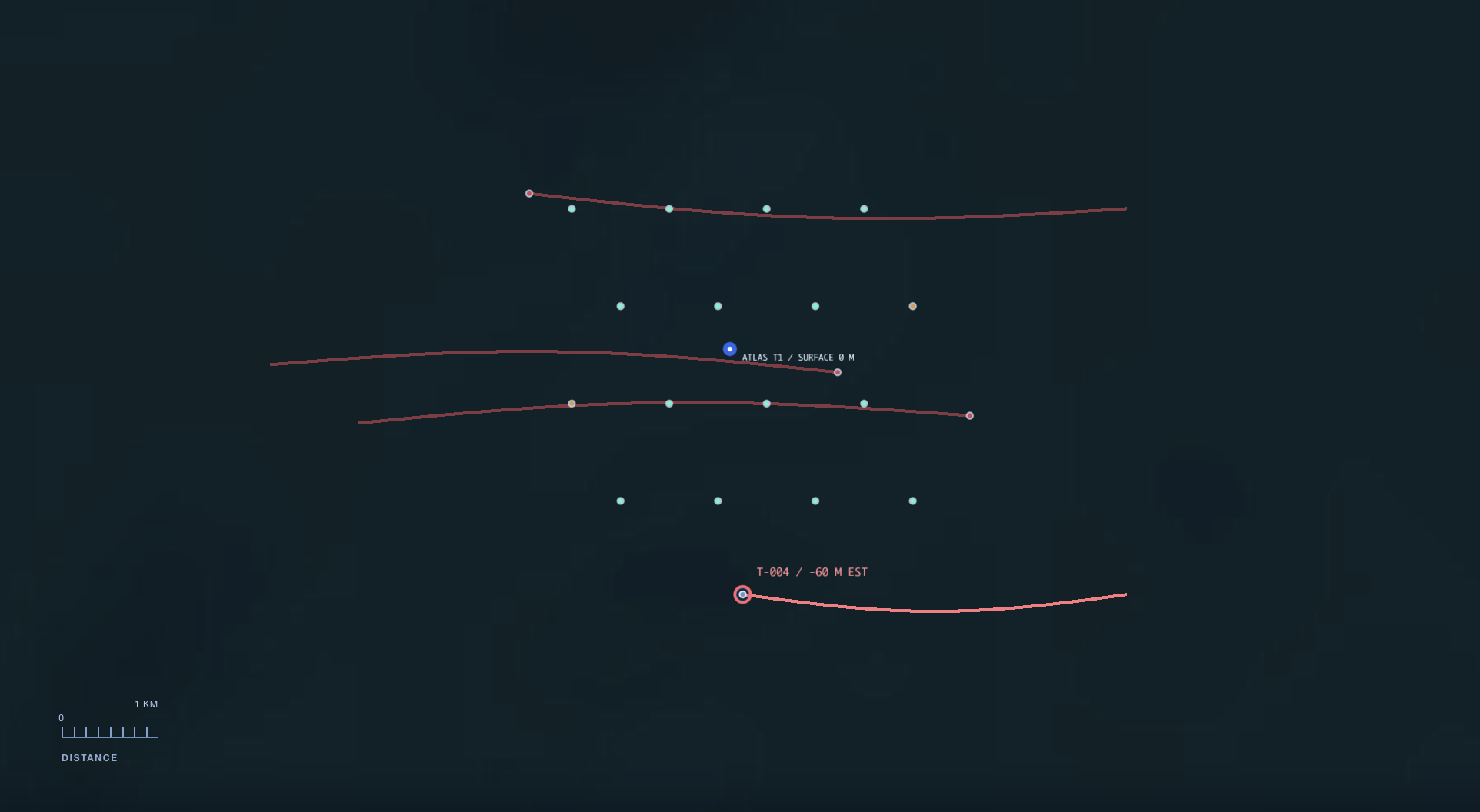
Switch to a top-down view when horizontal movement matters. Compare contact tracks with the sensor field.
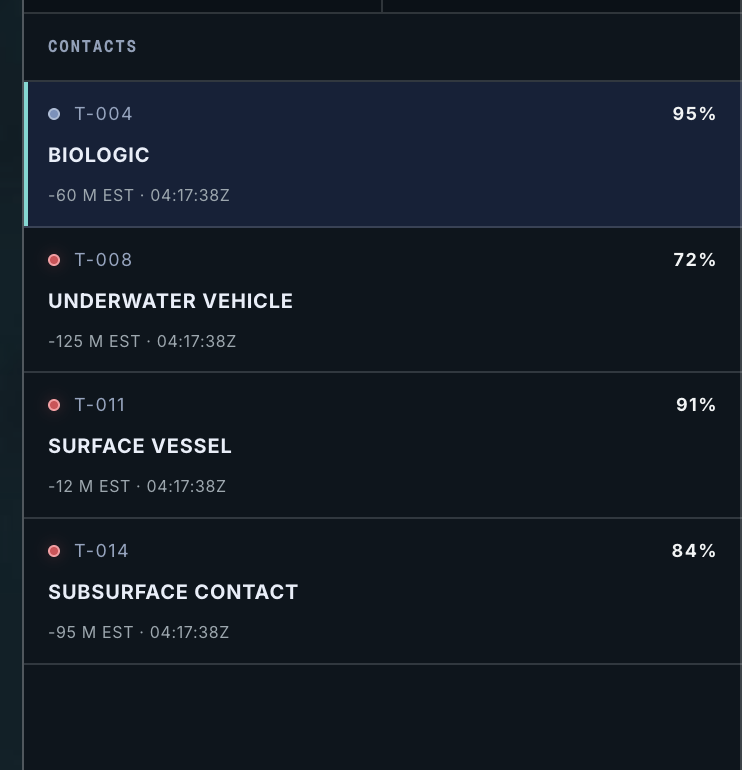
Classification, confidence, and estimated depth stay alongside each track.
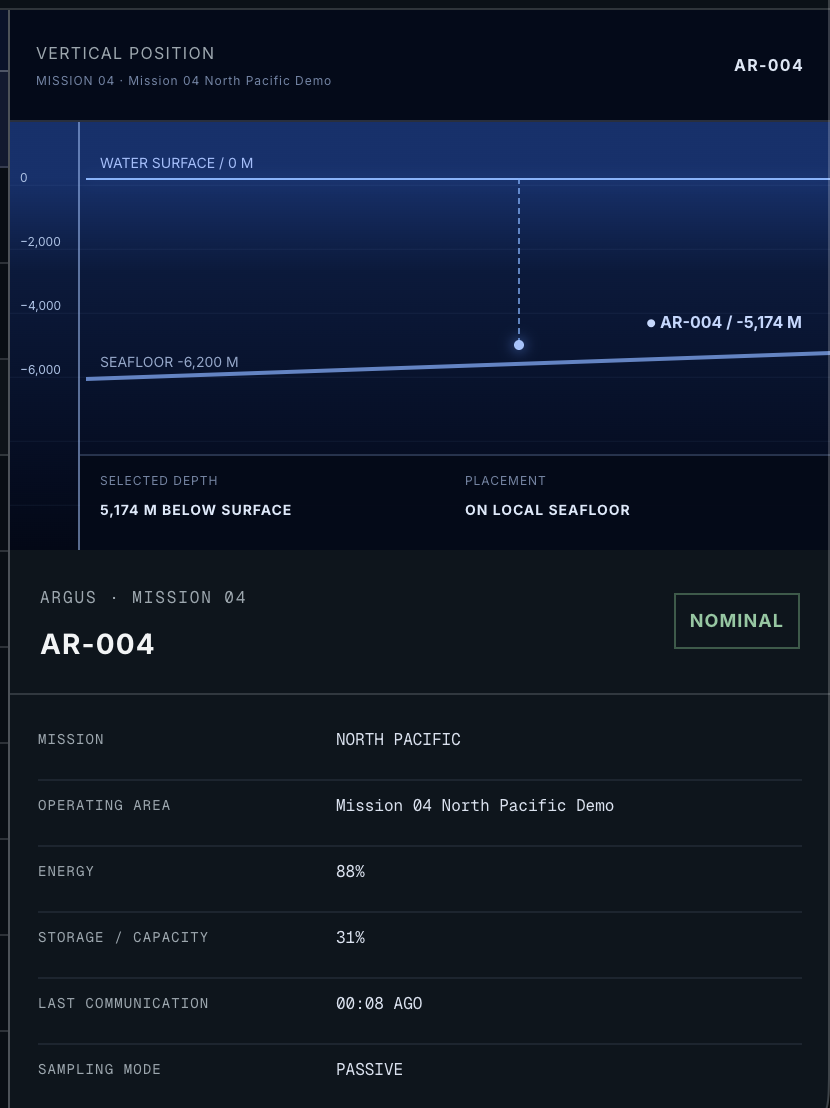
Fleet readiness starts with the condition of each node. Move from the network picture into the depth, health, and operating context of an individual asset.
Scan assets across missions. Distinguish nominal assets from those needing attention, then open the node for a closer look.
See its position between the surface and seafloor, then check energy and storage before planning the next service cycle.
The connected system
Argus understands the local environment. Nexus operates the larger system.
Sensor processing, event selection, compression, and battery-aware inference stay on each Argus node. Nexus brings compact observations and health reports into the wider mission picture.
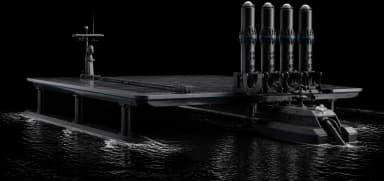
Model node placements, communication geometry, Atlas routes, UUV and ROV tasks, service windows, and mission rules in the context of the full field.
Bring compact node reports, surface context, and vehicle observations together. Direct connected assets toward events, with automation where policy allows and operator oversight preserved.
Operator interfaces and APIs are designed to connect mission data to existing defense, security, environmental, science, and asset-management systems.