01
Debris detection
Observe debris accumulation and changes in approach conditions before a blockage affects plant performance.

Application / Industrial intakes
Aphotic can monitor intake approaches and screens for debris, biological activity, sediment, and flow changes before they interrupt operations.
Intakes are affected by debris, marine growth, sediment, biological events, and changing flow conditions. Operators often discover a developing problem through process performance or after scheduling a manual inspection.
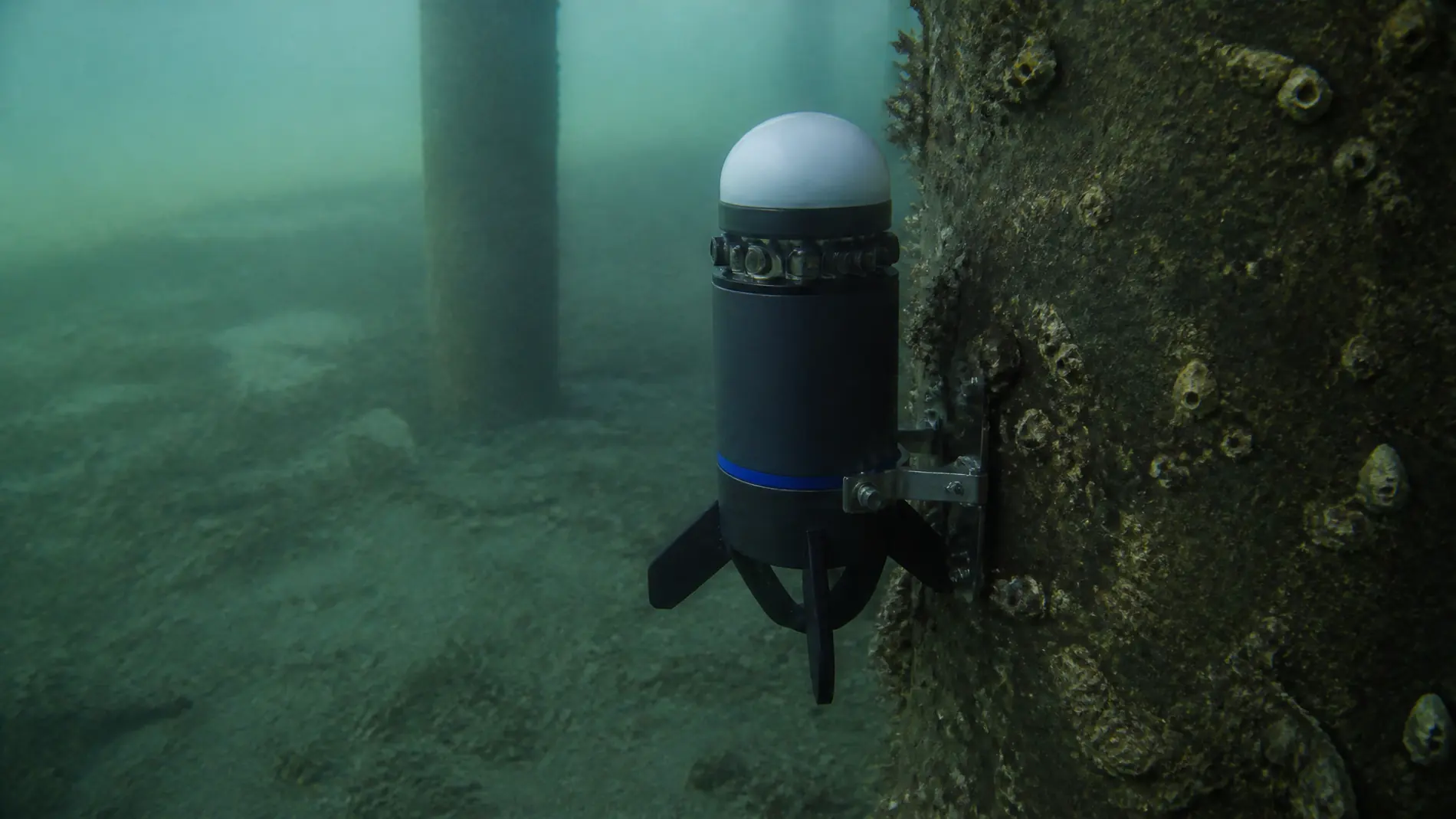
An Argus node can remain on the seabed near the approach and screen, or attach to the structure where that produces a better view. Cameras, acoustics, and environmental sensors feed local processing that identifies change and sends an alert with enough context to determine whether maintenance or a closer inspection is needed.
01
Observe debris accumulation and changes in approach conditions before a blockage affects plant performance.
02
Track visual and acoustic indicators of growth on screens, structures, and nearby surfaces.
03
Measure current, turbidity, and sediment behavior around the intake and relate changes to operating conditions.
04
Provide current imagery and event history so maintenance teams can plan work with better information.
System approach
The node can retain detailed data while transmitting concise measurements and change events through the available site connection.
Relevant systems
Argus A, B, and X share a common seabed sensing, edge-processing, storage, power-management, and acoustic-communications architecture. Atlas services the deployed fleet, while Nexus provides the operating picture, planning, alerts, and tasking above it.