
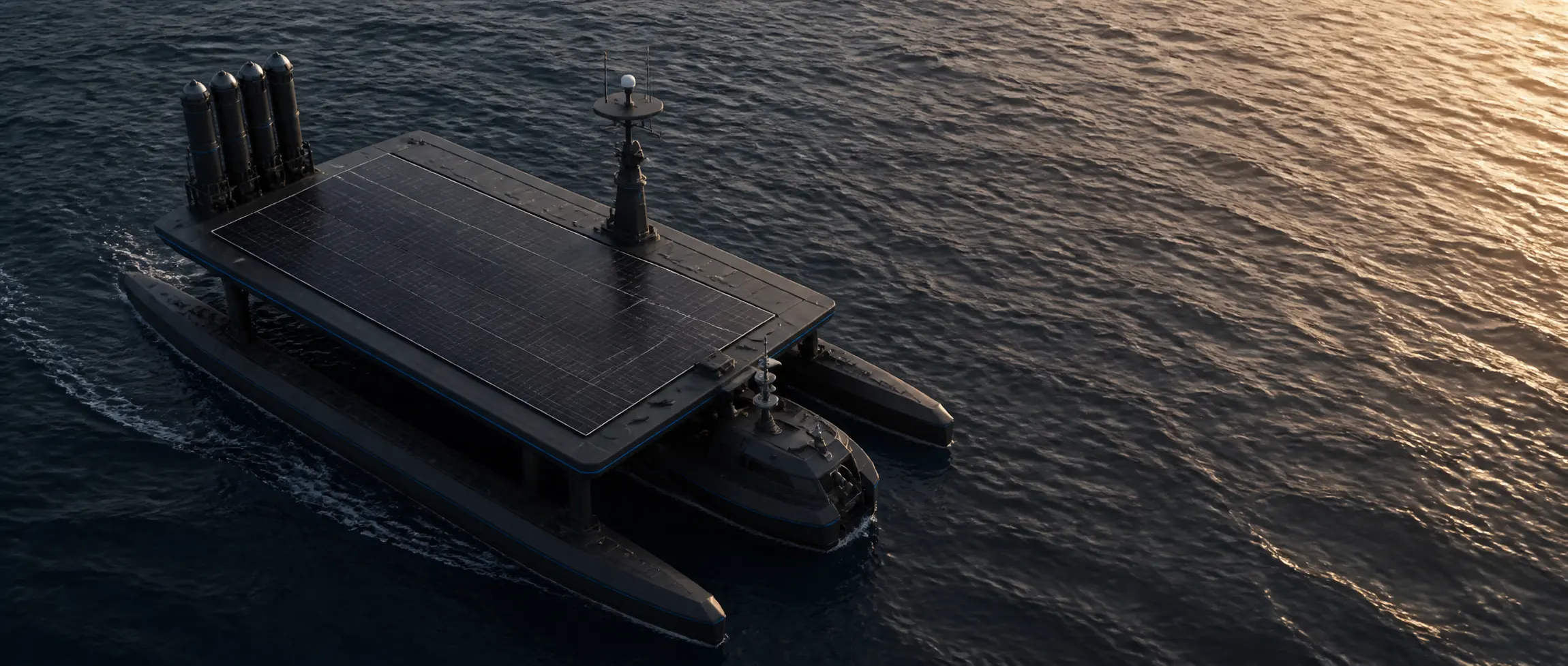
Autonomous deployment and service
Atlas
A solar-electric surface platform designed to carry multiple Argus nodes offshore, deploy them to the seafloor, recover them, offload data, recharge, and return them to the mission without a crewed support vessel remaining on site.
Pre-order
Platform overview
The Logistics Layer for Persistent Underwater Sensing
Seabed monitoring often becomes expensive because every deployment, battery change, data offload, and recovery requires ship time. Atlas is being developed to move those recurring tasks onto an autonomous platform that can remain in the operating area and service the node fleet as the mission changes.
The platform carries multiple Argus nodes in protected berths. Mission planning in Nexus defines deployment locations, service intervals, and recovery priorities. Atlas can then execute the surface transit and handling cycle while reporting status to the operator.
- Handling
- Carries, Releases, Recovers, and Secures Argus Nodes.
- Servicing
- Supports Recharge, Data Offload, Health Checks, and Mission Reassignment.
- Navigation
- Autonomous Transit and Station Operations Coordinated Through the Wider Aphotic System.
- Energy
- Solar-electric Primary Architecture Designed for Long-duration Offshore Presence.
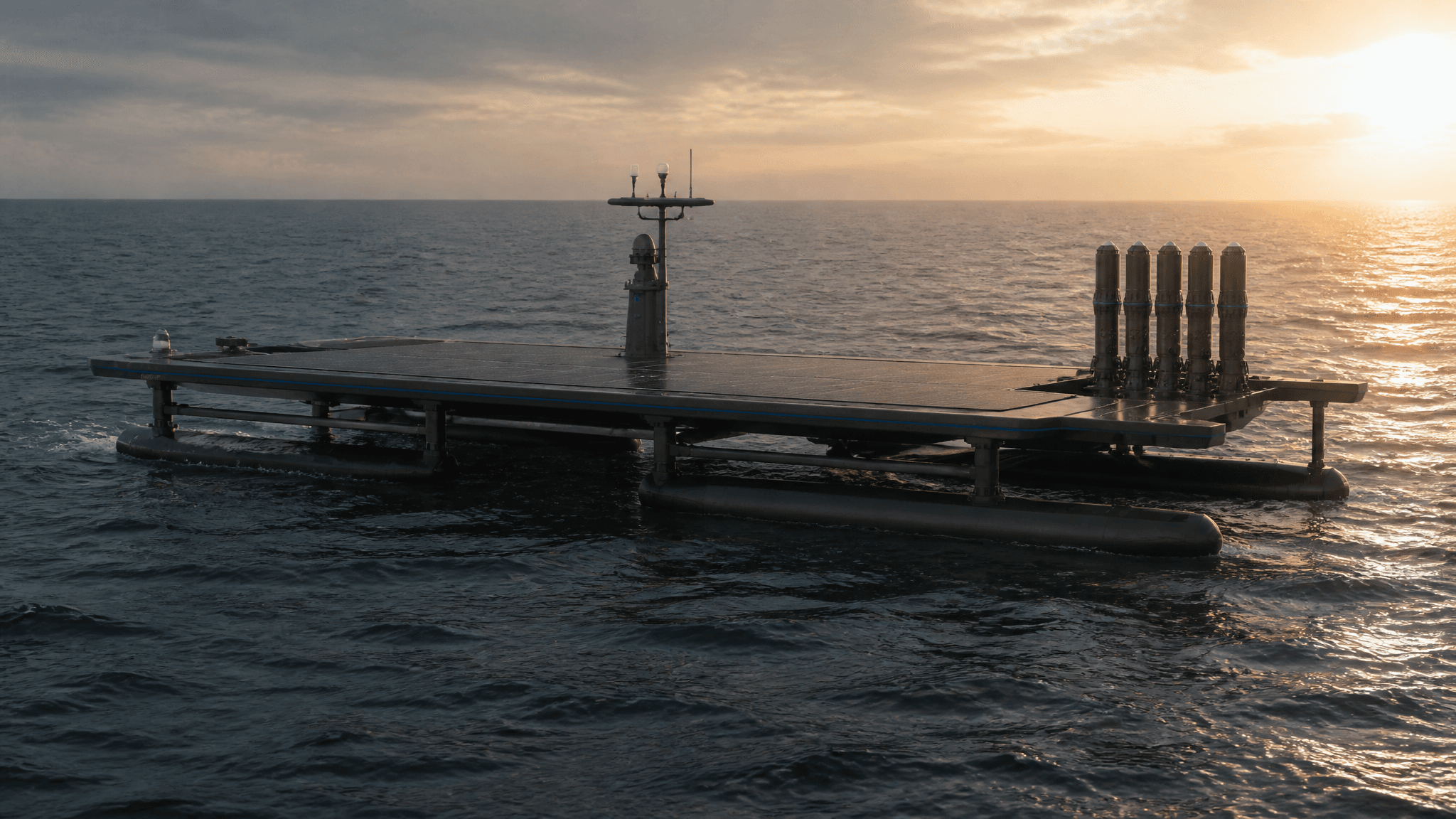
Clean-energy fleet support
A Practical Path from Deployment to Sustained Coverage
Atlas uses solar-electric power to carry, deploy, recover, recharge, and retask ocean equipment without keeping a crewed support vessel on station. By reducing repeated vessel campaigns, it is designed to advance cleaner ocean deployment and more sustainable long-duration monitoring, infrastructure, and research projects.
Pre-order
Configure Atlas Around the Argus Fleet
Choose the number of Argus berths, Atlas vessels, operating profile, and service functions required. Node capacity determines the initial platform scale; Aphotic will review the mission and return an engineering configuration, production availability, and formal quote.
Part of one system
Atlas Handles the Fleet. Nexus Handles the Mission.
Deployment, sensing, edge processing, acoustic communication, alerts, and retasking are planned as one operating loop rather than separate products.