01
Harbor approaches
Monitor selected underwater routes into protected areas and compare activity with known surface traffic.

Application / Ports and harbors
Aphotic extends monitoring below the waterline around entrances, berths, anchorages, and high-value infrastructure without adding routine vessel patrols.
Ports contain dense infrastructure, complex acoustic conditions, and constant vessel activity. The underwater picture is often much less complete than the surface picture, especially around piles, berths, intakes, and restricted areas.
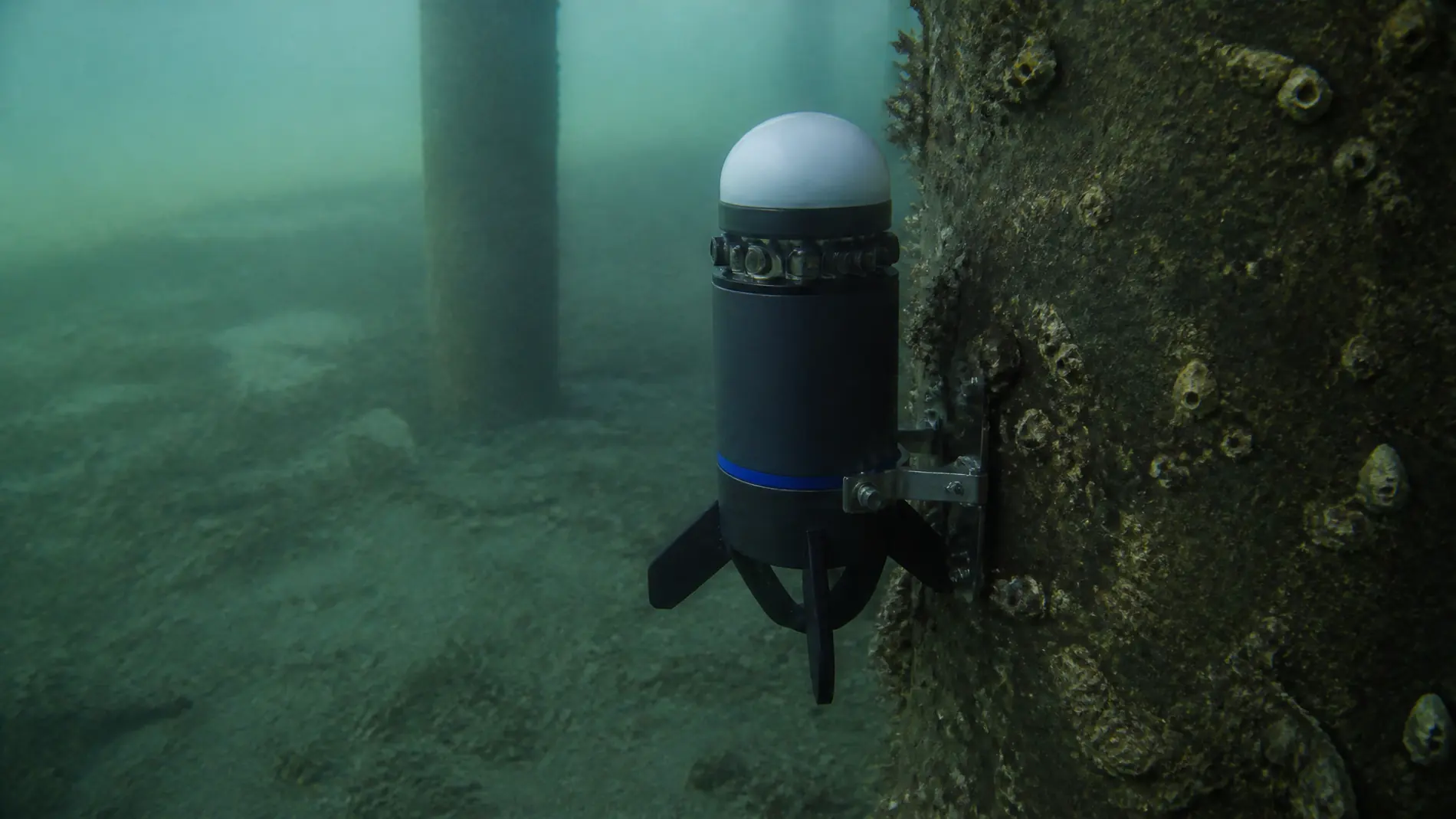
Argus nodes can be placed directly on the seafloor and, where useful, attached to existing structures or held at a selected depth. A coordinated field can identify events, compare observations across the harbor, and report only the information that warrants operator attention.
01
Monitor selected underwater routes into protected areas and compare activity with known surface traffic.
02
Observe high-value berths, piles, and the water volume around vessels without relying on continuous patrols.
03
Combine security sensing with visual and environmental measurements around piles, gates, and underwater assets.
04
Provide a location and evidence package that helps a diver, UUV, ROV, or security team investigate efficiently.
System approach
Seafloor deployment is the default. Structure attachment or midwater placement can be used where it improves sensing geometry around a specific port asset or approach.
Relevant systems
Argus A, B, and X share a common seabed sensing, edge-processing, storage, power-management, and acoustic-communications architecture. Atlas services the deployed fleet, while Nexus provides the operating picture, planning, alerts, and tasking above it.