01
Water quality
Track oxygen, temperature, salinity, turbidity, and current conditions across the farm and through depth.
Application / Aquaculture
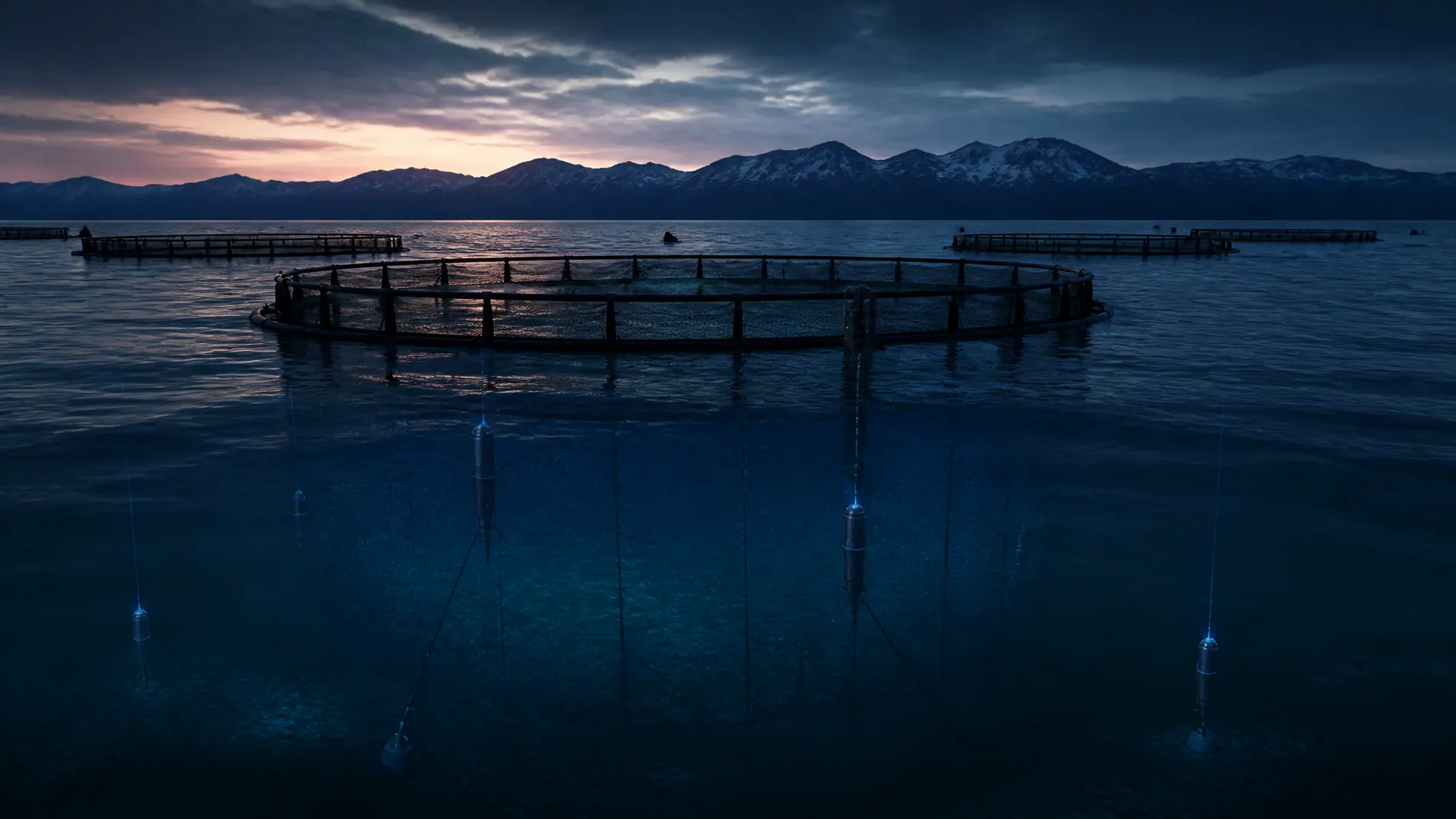
Distributed nodes can track oxygen, temperature, currents, biomass behavior, and structural conditions throughout a farm rather than at a single instrument location.
Conditions can vary significantly across a large farm and through the water column. A small number of surface-connected instruments may miss local oxygen changes, current patterns, biomass behavior, or early structural issues.
Argus nodes can be placed on pens and at selected depths to create a spatial picture of the site. Local models identify changes and reduce continuous sensor streams to the measurements and events that farm operators need.
01
Track oxygen, temperature, salinity, turbidity, and current conditions across the farm and through depth.
02
Use acoustic and optical observations to understand distribution, feeding response, and unusual movement.
03
Observe nets, frames, anchors, and moorings for changes that warrant maintenance or closer inspection.
04
Retain consistent, time-stamped measurements for operational review and regulatory programs.
System approach
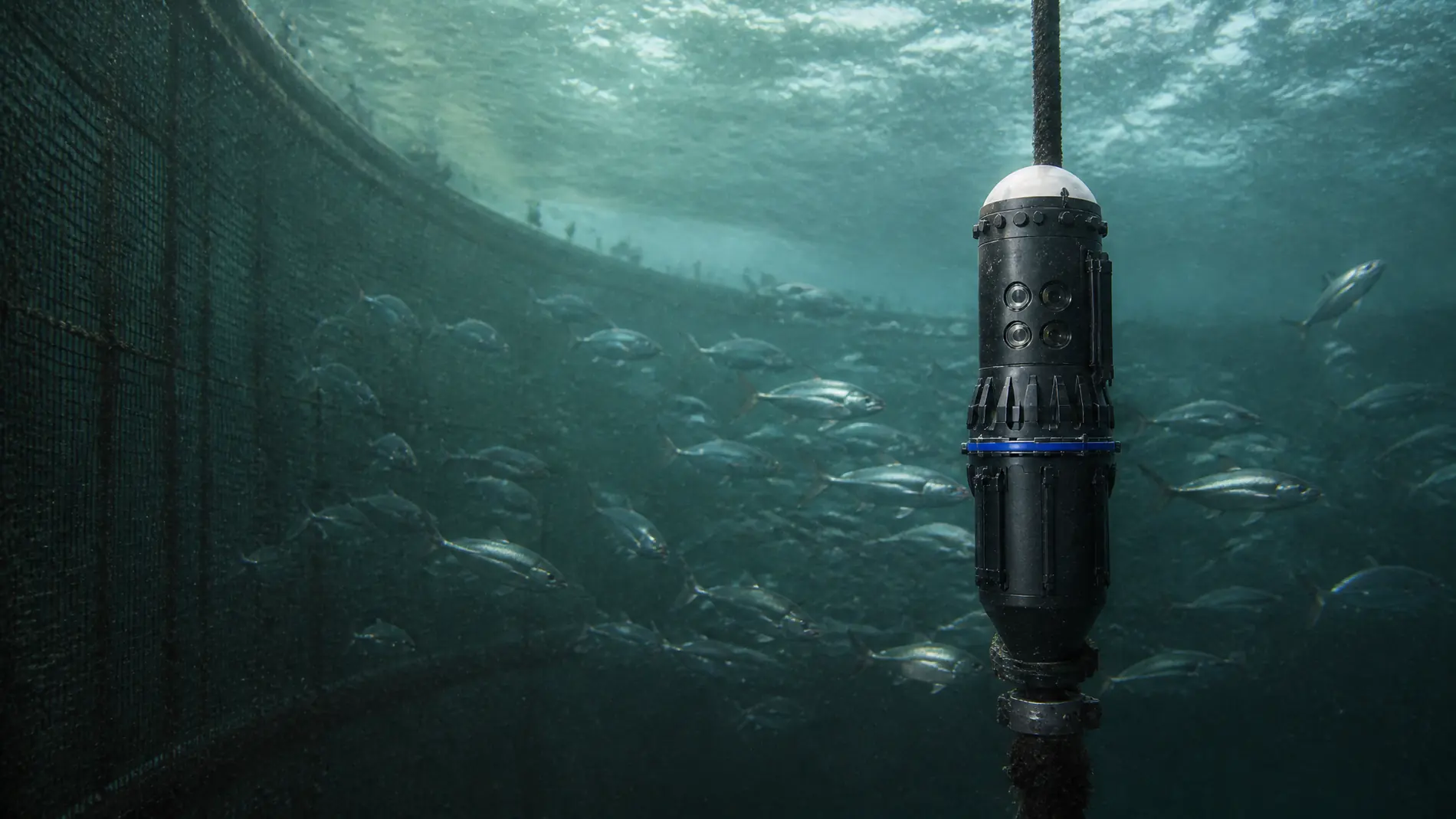
Argus A can be installed where it observes both the animals and the infrastructure while sharing a common data layer with nodes across the rest of the site.
Relevant systems
Argus A, B, and X share a common seabed sensing, edge-processing, storage, power-management, and acoustic-communications architecture. Atlas services the deployed fleet, while Nexus provides the operating picture, planning, alerts, and tasking above it.