01
Baited camera observation
Collect long-duration seafloor footage and use on-node processing to identify and classify animal activity.

Application / Ocean science and exploration
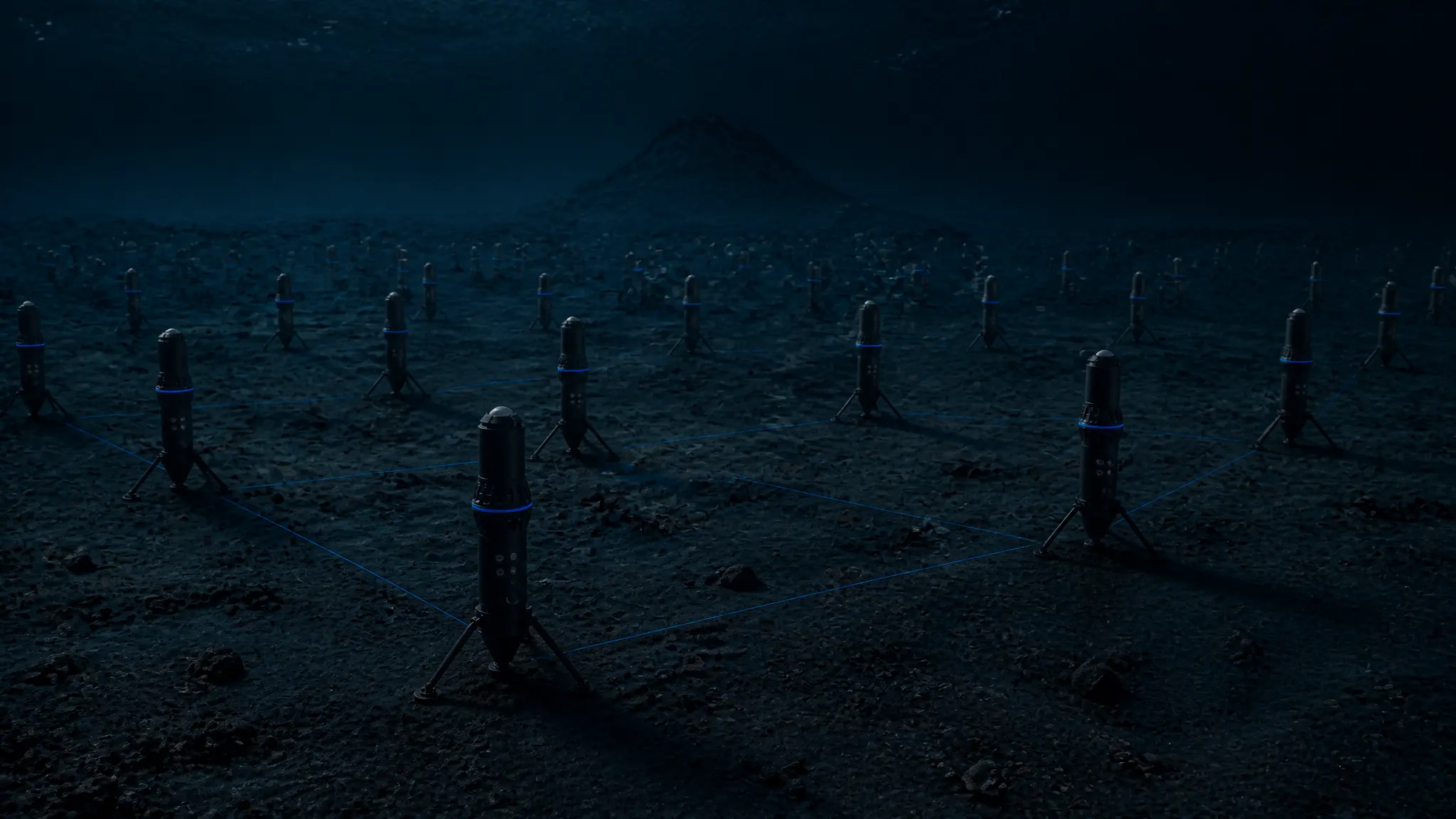
Argus can remain on the seafloor with environmental sensors, cameras, lighting, and mission-specific payloads, collecting and processing observations autonomously for months at a time.
The ocean is commonly explored through brief visits to a very large and dynamic environment. Important biological, geological, and chemical observations may occur when no ship or vehicle is nearby.
Argus can be configured with a baited camera and lighting, environmental sensors, or other mission payloads. It autonomously collects the record on the seafloor, processes imagery and sensor data locally, classifies observations such as animal presence, and organizes the evidence for later analysis. A detection can also direct a mobile platform toward a location that deserves closer study.
01
Collect long-duration seafloor footage and use on-node processing to identify and classify animal activity.
02
Pair imagery with physical, acoustic, chemical, or biological measurements selected for the research mission.
03
Reduce large raw records into time-stamped observations and classifications while retaining detailed evidence locally.
04
Use new evidence from Argus to direct underwater vehicles toward locations where closer inspection or additional sampling is valuable.
System approach
Persistent nodes can collect and interpret observations independently, then give ships and mobile vehicles a reason to visit a specific location.
Relevant systems
Argus A, B, and X share a common seabed sensing, edge-processing, storage, power-management, and acoustic-communications architecture. Atlas services the deployed fleet, while Nexus provides the operating picture, planning, alerts, and tasking above it.