01
Pipeline and riser monitoring
Observe movement, leakage indicators, acoustic change, and surrounding activity at selected high-consequence locations.

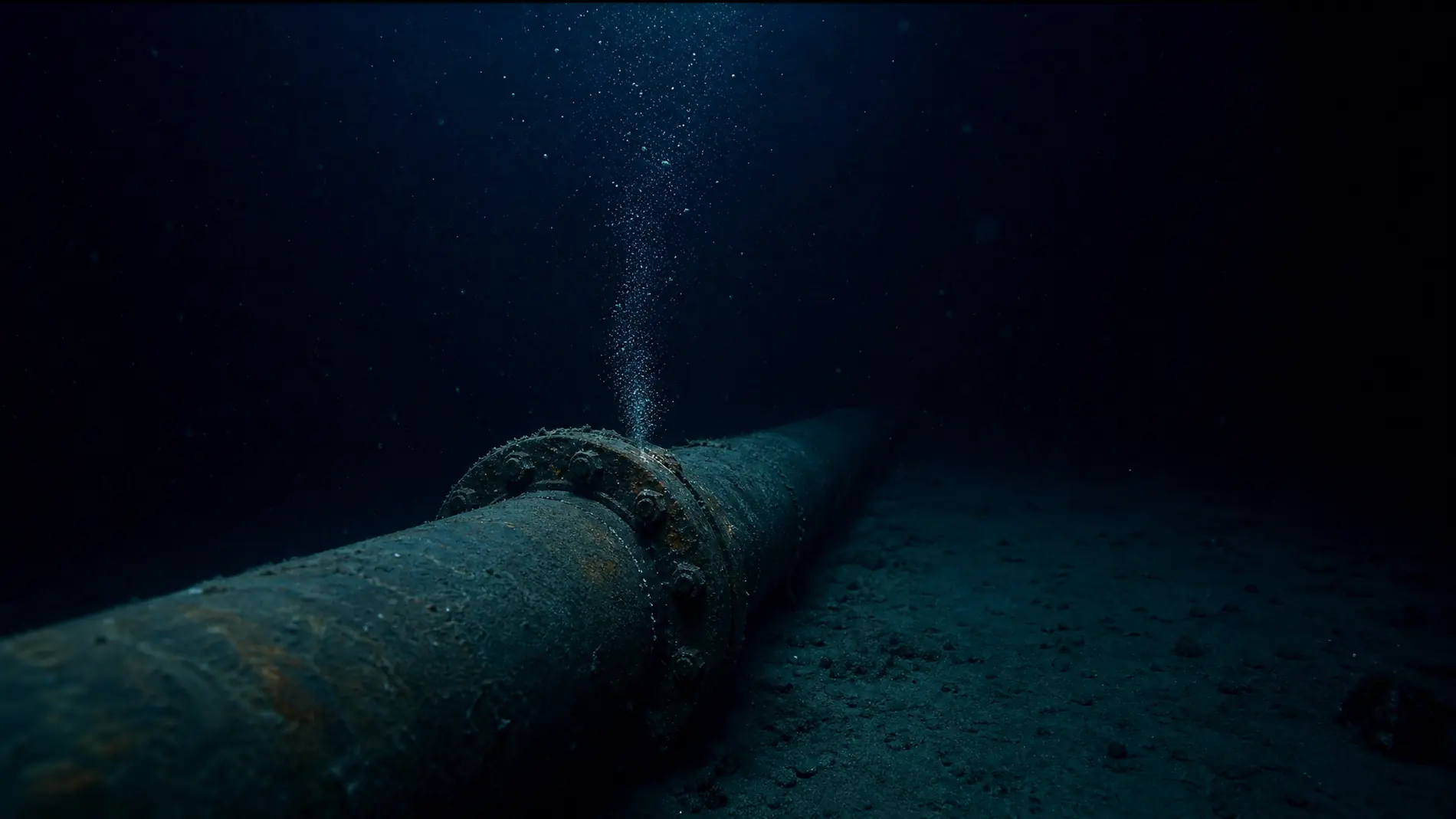
Application / Offshore energy
Aphotic supports long-duration observation of pipelines, risers, foundations, moorings, and surrounding water conditions across the operating life of an offshore asset.
Offshore assets are inspected at planned intervals and after specific alarms, but many changes develop gradually or occur between campaigns. A persistent sensor layer provides the time history needed to understand those changes and direct inspection effort where it is most useful.
Aphotic can combine acoustic, optical, chemical, and physical sensors at selected points around an asset. Local processing identifies deviations and events; Nexus organizes the results across the field and makes them available to operations, integrity, and environmental teams.
01
Observe movement, leakage indicators, acoustic change, and surrounding activity at selected high-consequence locations.
02
Track local currents, sediment, vibration, and visual condition around foundations and mooring systems.
03
Collect repeatable water-column and seabed measurements alongside operational data.
04
Use persistent observations to define when and where a diver, ROV, or UUV inspection is required.
System approach
The Argus family supports structure-mounted, midwater, and full-depth configurations while keeping a common payload and data workflow.
Relevant systems
Argus A, B, and X share a common seabed sensing, edge-processing, storage, power-management, and acoustic-communications architecture. Atlas services the deployed fleet, while Nexus provides the operating picture, planning, alerts, and tasking above it.